
In a very recent article posted to this site by Arnie Fenner, an equivalency is made between AI generated images and fan art made by conventional methods. It’s a short piece and I’d direct anyone interested to read it rather than having me summarize.
When I saw this, I was both surprised and disappointed. While I understand that many folks hold low opinions of fan art, I’d hope that there is at least a clear distinction between works born of one’s genuine efforts versus images generated by an automated computer program. Whatever subjective opinion you hold on the importance, creative merits, or even legality of fan art, it flat out is not comparable to genAI slop which has no human author.
I wanted to share my own thoughts on the nature and realities of fan art in response to that article. And I should probably begin by defining terms. When I write about fan art here, I’m including any art which is inspired by and directly referencing an existing creative work and was made independent of whoever holds the legal rights to that source work. I don’t know if this is a universal definition, but I think it’s a fairly comprehensive wide net. If you do a painting of Spider-Man that wasn’t commissioned by Marvel/Disney, that fits my catchall regardless of your motive. Similarly if you do paintings based on a property which is in the public domain, still fan art. If you do it for practice without showing it to anyone, still fan art. If you have a booth full of prints at a convention, still fan art. And if you were the actual creator of a character that was made under a work-for-hire contract and wish to draw that character again, still fan art. You might disagree with my definition, but this is the scope in how I use the word.
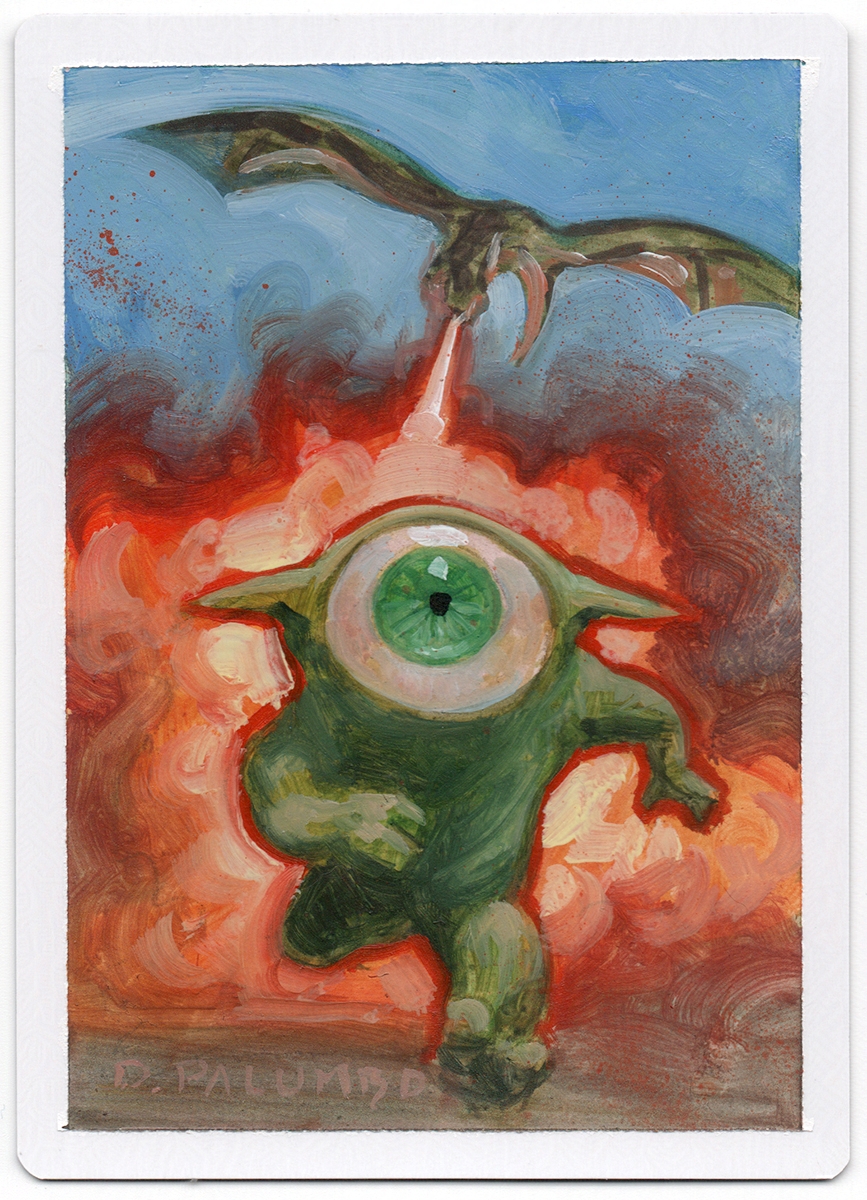
This is a miniature painting on the back of the Magic card Totally Lost. I was the the original artist for this card. The character took on life as a meme and eventually became a popular mascot for the game. In doing this painting, I am creating fan art of my own work.
There are a few threads I want to pull in the question of “should artists create fan art?” The first is the biggest elephant in the room: legal issues. This seems to be the central pilar of Arnie’s comparison. And I have a few problems with it.
The first issue I take here is that to equate fan art to GenAI as two comparable forms of “theft” (as infringement of copyright) is an oversimplification that I can’t personally abide. I’m not a lawyer, but even I understand that 1. At present, the use of copyright works for AI training appears to be legal as no court is saying otherwise. And 2. Fan art generally* would be a violation of copyright, but is rarely legally challenged. AI court cases are pending and so we don’t actually know what the law will say. Given how the law usually favors moneyed interests and the AI industry is so big that it is arguably propping up the US economy, I’m pessimistic that artists rights are going to triumph here in the US. But as a creator, I know that GenAI is morally bankrupt and will not pin my assessment of AI usability on the outcomes of these cases.
Meanwhile, fan art spaces at conventions and online are vibrant, organic, free publicity for the properties they celebrate and it seems clear to me this has residual benefits to the property owners while taking zero of their resources. I’d even go so far as to say corporations know that by looking the other way on fan art income, often done by their “official” artists, they are better positioned to underpay those artists.
In response to the simplistic closing line “If you’re going to talk the talk, you’ve got to walk the walk. And that means respecting everyone’s IP rights. Always” I say this is a false equivalency. The laws in one area are not even consistent in the other. The power dynamics and economics are not even close to the same.
Keep in mind the outsized legislative influence that huge corporations have compared to individual artists and who is most likely to prevail in any legal dispute between the two. It is a sad but true commentary that some of the most promising legal battles against AI are those being brought by giants like Disney. Because of this, I feel copyright is a reasonable and essential line of attack against a reckless and exploitative AI industry, but it is not a magic bullet. To reduce the complaint against AI to “copyright violation” is to ignore the other ways that GenAI undermines and harms artists. It is a massive effort backed by unimaginable financial resources designed to devalue and ultimate eliminate creative professionals. The goal is to displace and ultimately own and control the means to produce art and culture. This is a classic example of automation intended to eliminate workers for greater corporate profit. Suppose the AI companies lose in court but then form a partnership with Disney to legally build a new model trained on all of Disney’s assets? Hundreds of pieces that I’ve painted are legally owned by Disney and I would have no grounds to object. I would loathe this until the day I die, but that would be perfectly legal.
When it comes to the IPs so many fan art works are based on: how did these companies come to own those IPs? While it may all be legally settled that DC owns Superman and Marvel owns Spider-Man and so on, anybody who studies the history of these properties will find time and again creators whose work was taken from them and the fruits of their labor keep on making money long after they’re dead. As things currently stand (and because of legal battles over ownership with past creators) you can not work on most properties without agreeing to work-for-hire terms (iron clad and non-negotiable) and any new ideas or characters created become property of the company. And artists today understand this when signing our contracts. We know the heavy price to be paid if you want to be in the show. Part of being in the industry is understanding sooner or later that the industry is deeply exploitative. Legal doesn’t always equal moral.
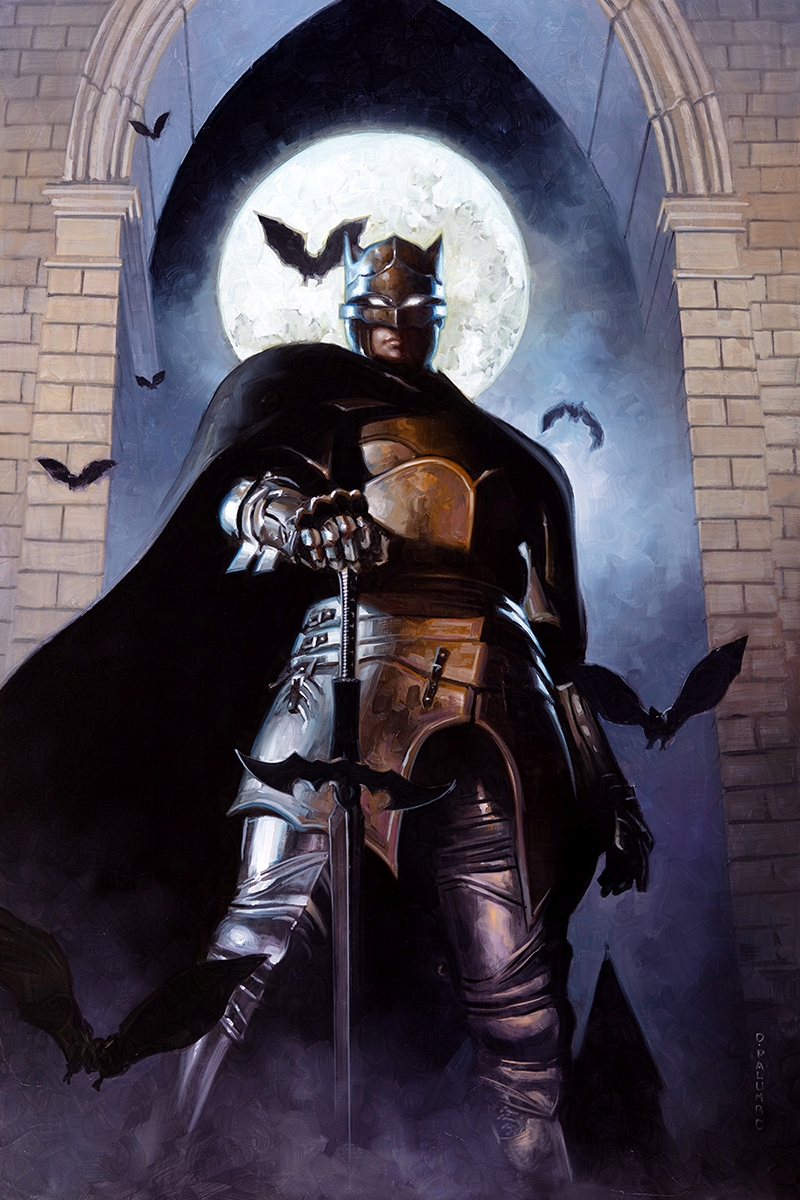
So what do we do when so much of our shared culture is privately owned by a very few huge companies? What do we do when our modern myths and legends are all owned by Disney? We all feel connection to the characters and stories that we technically legally are not allowed to draw pictures of. If an artist wishes to make a work that connects with a deep and personal childhood experience, maybe say trick-or-treating with friends, it’s totally conceivable that it might feature characters that Disney owns. While this specific hypothetical is not what we typically see being shown at Artist Alleys, I think the broader implication is the same: Our connection to pop culture runs deep within us and fan art is a way that this is often expressed.
To that point, most folks I know who work in genre illustration pursued this work because we were fans. We grew up wanting to be a part of the thing we loved and we drew our favorite characters in our notebooks during math class and kept at it in art school and kept at it year after year until eventually got to a point where we could Get Hired. The passion was often channeled though fan art. In fact, many of the companies that own these properties literally will not hire an artist until they see that artist create work based on their property. Fan art is literally how an artist moves from “aspiring” to “official.”
While many will dismiss fan art as vapid, predictable, and hollow, it can just as easily be transformative, innovative, and deeply personal. And often if a work is done by a well known artist, people might not even think of it as fan art, simply assuming it was done for some licensed release. Or people say “but they’ve worked on x,y, and z, so that doesn’t count.” I’d argue that most of us started as fans and remain so today and that passion is what propels us. That passion, whether in official or in fan works, is what gives the work life.
I have no similar defense for AI images. They make us all poorer for their existing.
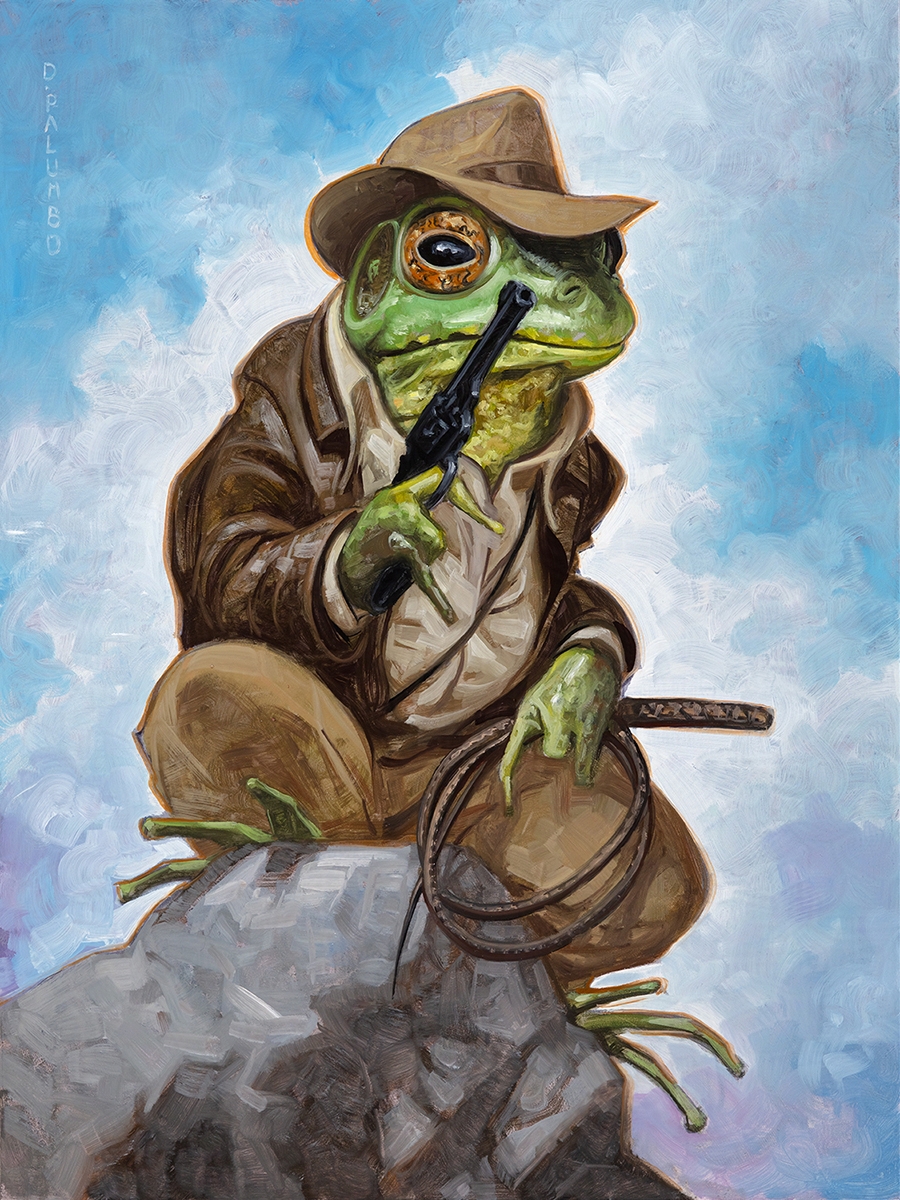
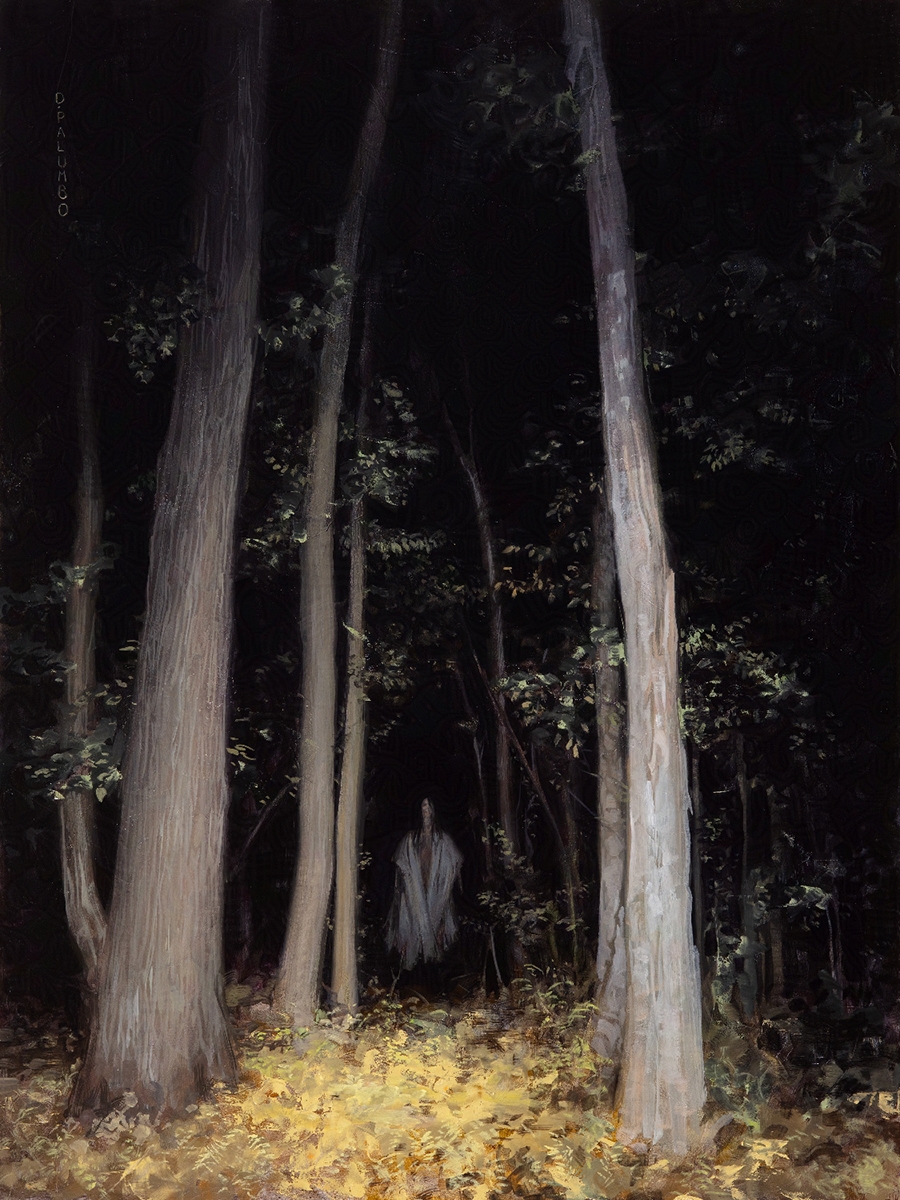
 Note: There are abundant examples of fan art from professional artists, many who are contributors on this site, but I don’t want any of my peers to misunderstand me and feel called out or to have any negative critique as a result of my sharing their work here, so instead I have pulled exclusively from my own work for visuals
*The first amendment and fair use are often cited as defenses of fan art. Unfortunately, laws are often shaped by those with the deepest pockets to favor corporate interests and my understanding is these are dubious defenses in most cases.



Ah, Dave, so you’re one of the guys who get mad when I say that “fan art” that’s generated to make money at the expense of the legitimate rights holder, is not ok. 🙂
You seem to have read a lot between the lines of my post and suggest I was saying things that I didn’t—which is ok. My fault, I guess. I thought I was pretty clear when I said artists can always draw anything they want whenever they want because the’s “passionate” about Disney or Star Wars or whatever, but once they start to monetize it in various ways (selling prints, for example), it’s no longer innocent, it’s no longer “fan art,” it’s commercial product.
How it’s created, whether with paint or prompts, doesn’t matter, to me anyway: in one way or anither it’s still copyright infringement. One person being mugged by somebody with a gun isn’t any different from another who is mugged by someone holding a knife: that they were mugged is the problem, not HOW they were mugged. Your defence of “fan art” being created by traditional artists doesn’t change that truth; it actually falls along the “Fair Use” defense the AI companies are currently trying (and apparently which is failing with, so far anyway) to justify the infringements they engaged in to create THEIR product.
Regardless of whether it’s a billion dollar corporation or some poor pencil pusher in Poughkeepsie dosn’t change the fact that…theft is theft. And “fan art” and “tribute art,” whether created by a pro or an amateur, that is turned into products to sell…is theft. Are there consequences for stealing? Sometimes. Most times not. Obeying the laws, respecting the rights of the IP owners. is often at the individual’s discretion, sorta like driving up to a Stop light at an intersection when nobody seems to be around. Do you still stop or do you run it? Your choice.
What the heck, Dave: you and anyone else can do whatever you want. But “fair” isn’t a legal term and if at some point some IP owner decides to crack down on a piece that they believe infringes on their property, I’ll be interested to see if the defense of “Our connection to pop culture runs deep within us and fan art is a way that this is often expressed” makes the judge and jury sympathetic. 🙂
Agree to disagree. I want to hit again my point that laws and execution of laws are heavily favored towards those with the most money, which is either the AI companies or the mega conglomerates that own pop culture and never the creatives doing the work. So if your stance is that one must hold a moral equivalency between GenAI and someone profiting from fan art they made, you are correct that I am one of the guys who get mad.
If you want to lean squarely on the law, I’ve talked with a copyright lawyer in depth on this and read the opinions of others and the agreement from experts is monetization/publication is irrelevant. Creation is the infringing act. That is what the law says according to copyright lawyers. Meanwhile, again, data training on copyright works is not currently illegal. So if your test for integrity is adherence to the law, get on board with that.
And I wanted a counterpoint on this blog which I see as pro-artist
Aww, Dave, you’re going the straw man route to support doing whatever you want to make a buck regardless of legality, morality, or ethics is absolute baloney.
I can be “pro-artist” without condoning stealing IPs. You’re apparently justifying infringement by traditional methods because of the artist’s “passion” and that is just as specious an argument as OpenAI’s claims that using artist’s work without permission to train their dragon is “fair use.” Theft is theft, regardless of the reasons, excuses, or hairs you want to split. So, yes, I guess we agree to disagree.
Oh, and Dave…maybe you should be talking to some different lawyers. As someone who has been involved in litigation more than once, any “experts” who make a blanket claim on an abstract hypothetical that “monetization/publication is irrelevant” aren’t really experts at all. 😊
Just highlighting that you’re vaguely accusing me of strawman tactics and in the same sentence employing strawman tactics, and nowhere do I see you correcting whatever my alleged strawman argument is (I really don’t know). I also don’t understand the comments suggesting I believe “fairness” to be a legal defense. I literally have a footnote on my article saying fair use and first amendment claims are probably going to lose in court if you get sued for fan art sales. If I misunderstand you, I would happily be corrected. The moral equivalency and that an artist must equally condemn AI use and sales of fan art are truly how I understand your perspective
Well…you’re wrong, Dave. Both in your argument essentially supporting illegal “fan art” sales (and that’s what you’re doing, Dave, justifying them because, in your words, it’s “not fair” that corporations own the IPs they bought because they *gasp* had the money to buy them with) and your stance that there’s stealing that’s wink-wink “ok” and stealing that isn’t ie with AI. I don’t support theft, period. My view is that stealing isn’t “ok,” whether it’s achieved by hand or with AI.
Arnie, are you responding to posts I can’t see? You are putting quotes around “not fair” and saying those are my words and I have no idea wtf you’re talking about here. I use the word “fair” twice in my article, once as part of “fair use” (again: saying this WON’T get you off the hook for infringement) and the other in saying my definition of fan art is “fair”ly encompassing.
Every time you clarify I feel like it’s just reinforcing my original understanding that you see both cases as theft and “theft is theft” and I do not see both cases in that same flattened equivalence.
The disregard of the power dynamics here are noteworthy. Disney actually has the power to stop fan art at conventions (just a few representatives handing out Cease and Desists would sure make a dent) if they wanted to do that, and yet they do not. Every artist I know wants to put a stop to GenAI companies training on their work but we very much lack the power to do so. Does this compute?
For the record, I’m not even advocating for folks to monetize fan art here for ANY reason. I’m just not going to shed any tears for all the theoretical profits lost to convention sketchbooks of Spider-Man drawings, but I will for the artists who are losing their jobs to GenAI
l Get paid over $110 per hour working from home. l never thought I’d be able to do it but my buddy makes over $22150 a month doing this and she convinced me to try. The possibility with this is endless….
Copy This ____________ EarnApp1.Com
l Get paid over $110 per hour working from home. l never thought I’d be able to do it but my buddy makes over $22150 a month doing this and she convinced me to try. The possibility with this is endless….
Copy This ____________ EarnApp1.Com
“whenever they want because the’s “passionate” about Disney or Star Wars or whatever,”
Should have read, “whenever they want because they’re “passionate” about Disney or Star Wars or whatever,” 🙂
ᴄᴀꜱʜ ᴇᴀʀɴɪɴɢ ᴊᴏʙ ᴛᴏ ᴇᴀʀɴꜱ ᴍᴏʀᴇ ᴛʜᴀɴ $700 ᴘᴇʀ ᴅᴀʏ. ɢᴇᴛᴛɪɴɢ ᴘᴀɪᴅ ᴡᴇᴇᴋʟʏ ᴍᴏʀᴇ ᴛʜᴀɴ $3500 ᴏʀ ᴍᴏʀᴇ ꜱɪᴍᴘʟʏ ᴅᴏɪɴɢ ᴇᴀꜱʏ ᴡᴏʀᴋ ᴏɴʟɪɴᴇ. ɴᴏ ꜱᴘᴇᴄɪᴀʟ ꜱᴋɪʟʟꜱ ʀᴇQᴜɪʀᴇᴅ ꜰᴏʀ ᴛʜɪꜱ ᴊᴏʙ ᴀɴᴅ ʀᴇɢᴜʟᴀʀ ᴇᴀʀɴɪɴɢ ꜰʀᴏᴍ ᴛʜɪꜱ ᴀʀᴇ ᴊᴜꜱᴛ ᴀᴡᴇꜱᴏᴍᴇ. ᴀʟʟ ʏᴏᴜ ɴᴇᴇᴅ ɪꜱ 2 ʜʀꜱ ᴀ ᴅᴀʏ ꜰᴏʀ ᴛʜɪꜱ ᴊᴏʙ ᴀɴᴅ ᴇᴀʀɴɪɴɢ ᴀʀᴇ ᴀᴡᴇꜱᴏᴍᴇ. ᴇᴠᴇʀʏ ᴘᴇʀꜱᴏɴ ᴄᴀɴ ɢᴇᴛ ᴛʜɪꜱ ʙʏ ꜰᴏʟʟᴏᴡ ᴅᴇᴛᴀɪʟꜱ ʜᴇʀᴇ…
.
ᴍᴏʀᴇ ᴅᴇᴛᴀɪʟꜱ ꜰᴏʀ ᴜꜱ ————————➤ Cash43.Com
ʜᴏᴍᴇ ᴄᴀꜱʜ ᴇᴀʀɴɪɴɢ ᴊᴏʙ ᴛᴏ ᴇᴀʀɴꜱ ᴍᴏʀᴇ ᴛʜᴀɴ $500 ᴘᴇʀ ᴅᴀʏ. ɢᴇᴛᴛɪɴɢ ᴘᴀɪᴅ ᴡᴇᴇᴋʟʏ ᴍᴏʀᴇ ᴛʜᴀɴ $4.5ᴋ ᴏʀ ᴍᴏʀᴇ ꜱɪᴍᴘʟʏ ᴅᴏɪɴɢ ᴇᴀꜱʏ ᴡᴏʀᴋ ᴏɴʟɪɴᴇ. ɴᴏ ꜱᴘᴇᴄɪᴀʟ ꜱᴋɪʟʟꜱ ʀᴇQᴜɪʀᴇᴅ ꜰᴏʀ ᴛʜɪꜱ ᴊᴏʙ ᴀɴᴅ ʀᴇɢᴜʟᴀʀ ᴇᴀʀɴɪɴɢ ꜰʀᴏᴍ ᴛʜɪꜱ ᴀʀᴇ ᴊᴜꜱᴛ ᴀᴡᴇꜱᴏᴍᴇ. ᴀʟʟ ʏᴏᴜ ɴᴇᴇᴅ ɪꜱ 2 ʜʀꜱ ᴀ ᴅᴀʏ ꜰᴏʀ ᴛʜɪꜱ ᴊᴏʙ ᴀɴᴅ ᴇᴀʀɴɪɴɢ ᴀʀᴇ ᴀᴡᴇꜱᴏᴍᴇ. ᴇᴠᴇʀʏ ᴘᴇʀꜱᴏɴ ᴄᴀɴ ɢᴇᴛ ᴛʜɪꜱ ʙʏ ꜰᴏʟʟᴏᴡ ᴅᴇᴛᴀɪʟꜱ ʜᴇʀᴇ.
ᴍᴏʀᴇ ᴅᴇᴛᴀɪʟꜱ ꜰᴏʀ ᴜꜱ ————————- Payathome9.Com
These are the sort of discussions that need to be had. How does fan art harm the original artists? How does AI harm artists? Is it the same? Is it different? I hope in a forum like Muddy Colors these issues can be hashed out without hard feelings as you both make great points.
I agree, Bethany! All worth talking about.
Determining “harm” I guess is often a matter of perspective: the person selling their own bootleg Hellboy prints in Artist Alley (because, hey, they’re passionate about the character) might not believe he’s hurting anybody, but Mike Mignola might not have the same opinion.
When I was at Andrews McMeel Universal their legal department was routinely sending C&D letters to companies and individuals who were infringing on the Calvin and Hobbes copyright by selling various bootleg products. How much was Bill Watterson “harmed” by all those Calvin-peeing-on-Chevy-logo decals or T-shirts (which certainly made somebody-not-Watterson a fair bit of scratch)? I don’t think it matters. Bill didn’t want to license Calvin and Hobbes—to the bootleggers or anyone else—and that’s all that should count. IMO anyway.
I think there’s a difference between Mignola or Watterson – creators who own their IP as a result of their own labor, vs a faceless megacorp that “owns” an IP only by virtue of exploitative labor arrangements that transfer the ownership away from the actual creators.
Ken, 100%. And on that very specific example, I once brought a Hellboy tribute piece with me to SDCC but only AFTER securing the blessing of Mike Mignola
At least you asked. 99.9%…don’t.
Well said Ken. I think that materially-based distinction is more important and more of an interesting conversation than “theft is theft”. That take is a little reductionist.Kind of hard to untangle power/labor dynamics when talking about the very concept of Intellectual Property, especially in the US.
Ken, I think that’s being selective to justify infringement. Saying that people shouldn’t rip off Mignola and Watterson because they’re good-guys-individuals, but it’s alright to rip off companies because they’re companies (who have paid their employees for their work—maybe not as much as they should have given a crystal ball, but they paid)—doesn’t make sense. Everyone’s IPs deserve respect.
Yes – I think there are contexts where treating individuals and corporations identically doesn’t lead to just outcomes so in that sense I am definitely doing selective justifications.
That’s a good point to remember.
Good article, but not at all what I took away from the post it’s in response to regarding AI-generated art.
Nothing wrong with fan art. Aside from potential rights violations and legal pitfalls, compounded by many fan artists’ misconceptions regarding fair use and commerce. Recognizing that does not dismiss the skill of the artist’s or their passion or insights they may offer. But the sense of entitlement that sometimes creeps among the community, that fan artists should be able to profit however they choose from the work of others, that’s an unpleasant aspect that plainly parallels AI companies training their models on artists’ work.
AI-generated fan art compounds those negative elements with a mockery of artist skill and disregard of their rights. It takes all of the unflattering aspects of fan art and cobbles together images based on IP it doesn’t own without actual craft and effort. No, describing an artwork in spectacular detail to someone who then creates it doesn’t make the artist… or photographer, or musician, etc. issuing prompts to an AI doesn’t make the prompter an artist.
I think this is a well written article, but it doesn’t jibe with what I understood from post it takes to task.
“ No, describing an artwork in spectacular detail to someone who then creates it doesn’t make ME the artist… “
I’d formatted the ME and it dropped out on post. Added here for clarity.
Great article, Dave! Thank you for writing even knowing the complexity of the topic!
I think Arnie roots for Javert in Les Mis. In all seriousness, I think scale is important to consider here. Stealing a paperclip vs robbing Fort Knox.
Obviously, Jose, you don’t know me at all. 😊
“So what do we do when so much of our shared culture is privately owned by a very few huge companies? What do we do when our modern myths and legends are all owned by Disney?” Sure says “life’s not fair” to me, but maybe I’m reading between the lines (like I think of you). If I’m mistaken, my apologies.
But IF I’m actually reading you correctly, you’re arguing that “passion” for the material justifies stealing and profiting and that the infringers should be absolved of legal responsibility because of that passion and because corporate owners I guess stink. I simply don’t buy it.
Your argument isn’t entirely wrong and it’s not bad, but it’s also not right and it’s not good. You’re simplifying things by saying that a billion-dollar corporation, which despite the enormous amount of real money sitting idle and invented money circulating, continues to aim for profit, should be treated with the same weight as an artist struggling to feed their family. This isn’t just about stealing being wrong, but about what constitutes stealing. If you can’t understand that, you need to stop for a moment and rethink how much of your soul you’ve already sold.
I am totally with Dave here….and more than a little surprised and disappointed in Arnie for so easily looking past the humanity of artists. How on earth can you say artists and and robots should be treated equally…and by “equally” that means taking artists down to the robot level?! I resent being called a “thief” for making fan art.
Thanks for writing about this topic in a nuanced way, Dave! I think the key here, as you point out, is legality versus ethics, which are not always equivalent. The ethics of fan art can be fuzzy, because it depends entirely on the reception of that fan art by the IP holder! If monetized fan art univerally hurt every IP holder, then there wouldn’t be so many companies actively encouraging it (knowing that the fan art creators are likely making some money off that work). We wouldn’t have conventions with art shows specifically *dedicated* to fan art celebrating the theme of that convention. And we wouldn’t have companies hiring artists or offering licensing deals on the *basis* of their existing (and probably monetized) fan art. Sure, some companies are stringent with their IPs and go after any infrigment. But others recognize that fan art is part of what keeps their brand alive, and potentially losing a few pennies of sales to prints sold by fan artists is well worth the free publicity.
(Typo – infrigment should be infringement!)
ᴄᴀꜱʜ ᴇᴀʀɴɪɴɢ ᴊᴏʙ ᴛᴏ ᴇᴀʀɴꜱ ᴍᴏʀᴇ ᴛʜᴀɴ $700 ᴘᴇʀ ᴅᴀʏ. ɢᴇᴛᴛɪɴɢ ᴘᴀɪᴅ ᴡᴇᴇᴋʟʏ ᴍᴏʀᴇ ᴛʜᴀɴ $3500 ᴏʀ ᴍᴏʀᴇ ꜱɪᴍᴘʟʏ ᴅᴏɪɴɢ ᴇᴀꜱʏ ᴡᴏʀᴋ ᴏɴʟɪɴᴇ. ɴᴏ ꜱᴘᴇᴄɪᴀʟ ꜱᴋɪʟʟꜱ ʀᴇQᴜɪʀᴇᴅ ꜰᴏʀ ᴛʜɪꜱ ᴊᴏʙ ᴀɴᴅ ʀᴇɢᴜʟᴀʀ ᴇᴀʀɴɪɴɢ ꜰʀᴏᴍ ᴛʜɪꜱ ᴀʀᴇ ᴊᴜꜱᴛ ᴀᴡᴇꜱᴏᴍᴇ. ᴀʟʟ ʏᴏᴜ ɴᴇᴇᴅ ɪꜱ 2 ʜʀꜱ ᴀ ᴅᴀʏ ꜰᴏʀ ᴛʜɪꜱ ᴊᴏʙ ᴀɴᴅ ᴇᴀʀɴɪɴɢ ᴀʀᴇ ᴀᴡᴇꜱᴏᴍᴇ. ᴇᴠᴇʀʏ ᴘᴇʀꜱᴏɴ ᴄᴀɴ ɢᴇᴛ ᴛʜɪꜱ ʙʏ ꜰᴏʟʟᴏᴡ ᴅᴇᴛᴀɪʟꜱ ʜᴇʀᴇ…
.
ᴍᴏʀᴇ ᴅᴇᴛᴀɪʟꜱ ꜰᴏʀ ᴜꜱ ————————➤ job40.media
789BET เป็นแพลตฟอร์มความบันเทิงออนไลน์ครบวงจร ที่รวบรวมเกมคาสิโนสด สล็อต กีฬา และเกมยอดนิยมไว้ในที่เดียว เว็บไซต์ได้รับการออกแบบให้ใช้งานง่าย ปลอดภัย และมีเสถียรภาพสูง มุ่งมั่นในการมอบประสบการณ์ความบันเทิงที่น่าเชื่อถือ โปร่งใส และเต็มไปด้วยความสนุกให้กับผู้เล่นทุกคน
ᴄᴀꜱʜ ᴇᴀʀɴɪɴɢ ᴊᴏʙ ᴛᴏ ᴇᴀʀɴꜱ ᴍᴏʀᴇ ᴛʜᴀɴ $700 ᴘᴇʀ ᴅᴀʏ. ɢᴇᴛᴛɪɴɢ ᴘᴀɪᴅ ᴡᴇᴇᴋʟʏ ᴍᴏʀᴇ ᴛʜᴀɴ $3500 ᴏʀ ᴍᴏʀᴇ ꜱɪᴍᴘʟʏ ᴅᴏɪɴɢ ᴇᴀꜱʏ ᴡᴏʀᴋ ᴏɴʟɪɴᴇ. ɴᴏ ꜱᴘᴇᴄɪᴀʟ ꜱᴋɪʟʟꜱ ʀᴇQᴜɪʀᴇᴅ ꜰᴏʀ ᴛʜɪꜱ ᴊᴏʙ ᴀɴᴅ ʀᴇɢᴜʟᴀʀ ᴇᴀʀɴɪɴɢ ꜰʀᴏᴍ ᴛʜɪꜱ ᴀʀᴇ ᴊᴜꜱᴛ ᴀᴡᴇꜱᴏᴍᴇ. ᴀʟʟ ʏᴏᴜ ɴᴇᴇᴅ ɪꜱ 2 ʜʀꜱ ᴀ ᴅᴀʏ ꜰᴏʀ ᴛʜɪꜱ ᴊᴏʙ ᴀɴᴅ ᴇᴀʀɴɪɴɢ ᴀʀᴇ ᴀᴡᴇꜱᴏᴍᴇ. ᴇᴠᴇʀʏ ᴘᴇʀꜱᴏɴ ᴄᴀɴ ɢᴇᴛ ᴛʜɪꜱ ʙʏ ꜰᴏʟʟᴏᴡ ᴅᴇᴛᴀɪʟꜱ ʜᴇʀᴇ…
.
ᴍᴏʀᴇ ᴅᴇᴛᴀɪʟꜱ ꜰᴏʀ ᴜꜱ ————————➤ job40.media
l Get paid over $110 per hour working from home. l never thought I’d be able to do it but my buddy makes over $22150 a month doing this and she convinced me to try. The possibility with this is endless….
Copy This ____________ EarnApp1.Com
The comparison between fanart and gen AI is lacking some research on the topic. I think it’s important acknowledge many IPs are happy to allow fanart, I would say it’s pretty 50/50 if you take Disney and Viz media out of the picture it’s more like 80/20 in favor of IPs being pro fanart, as they view it as mutually beneficial. Copyright holders of original material under US laws are able to decide how their IPs can be used, that means there is no inherent copyright infringement. Just depends on the company and what they allow or don’t . To compare these issues in to Gen AI I feel only benefits the pro AI agenda.
I have to disagree with you. I have yet to see any IP owners officially say they are “happy to allow fanart.” Certainly not DC or Marvel or Warner Bros., who have definitely made examples of infringers in the past. Any time they want to drop the legal hammer on an artist infringing on their copyrights, they can; that they often turn a blind eye has more to with their wanting to spend their time, energy, and resources on bigger challenges than anything else.
l Get paid over $110 per hour working from home. l never thought I’d be able to do it but my buddy makes over $22150 a month doing this and she convinced me to try. The possibility with this is endless….
Copy This ____________ Work27.Online
l Get paid over $110 per hour working from home. l never thought I’d be able to do it but my buddy makes over $22150 a month doing this and she convinced me to try. The possibility with this is endless….
Copy This ____________ EarnApp1.Com