

When we create work that our heart is connected to, other people connect to it too. It’s the secret sauce, that “je ne sais quoi” that your favorite artists have. This usually leads to building an audience that, if you are lucky, can translate into business.
“Making Comics” by Scott McCloud is aimed at comic creators, but any artist can find value in it. I haven’t read any resources that discuss art-making values but McCloud gives definitions summarizing four different ideologies of picture makers. He calls these groups “campfires” where like-minded artists gather. Figuring out, what we want to say and how it should look is a lifetime exploration but the more we understand the choices we make the closer we are to creating the work we’ve always dreamed of.
Below are McCloud’s definitions:
Classicist:
Excellence, hard work, master of craft, the quest for enduring beauty.
Animists:
Putting content first, creating life through art, trusting one’s intuition.
Formalist:
Understanding of experimentation with, and loyalty to the comics form.
(We can switch the word comics out for any type of medium or art form)
Iconoclasts:
Honesty, vitality, authenticity, and unpretentiousness, putting life first.
Identifying with McCloud’s terms has helped me find reassurance in what I’m doing. I always thought I was a classicist, mostly because they are whom I’ve learned from. Classicists are some of our greatest teachers of technique but I’ve come to accept I’m a formalist. In totally formalist form, I wanted to do something different on Muddy Colors. Today, I’m taking a stab at identifying the campfires of artists’ and illustrators’ from history. I’ve also included the dates they lived for educational and comparisons purposes. Let’s go!
John Singer Sargent (1856-1925)
Formalist
At first, I wanted to pick classicist because hello, it’s the JSS. But consider the period he was living in… It doesn’t get more experimental than this?

Madame X, 1883–1884
Claude Monet (1840-1926)
Iconoclast
McCloud’s words about iconoclasts, “putting life first” comes to mind when I think of Monet. Monet curated his entire home and garden, these were extensions of his art which were, of course, his deepest inspirations. I also find Monet unpretentious …have you read his letters?!
Henry Ossawa Tanner (1859-1937)
Animist
His work depicts real life but it’s also it’s jam-packed with emotion. For me, it’s that emotional storytelling that punches through the most.
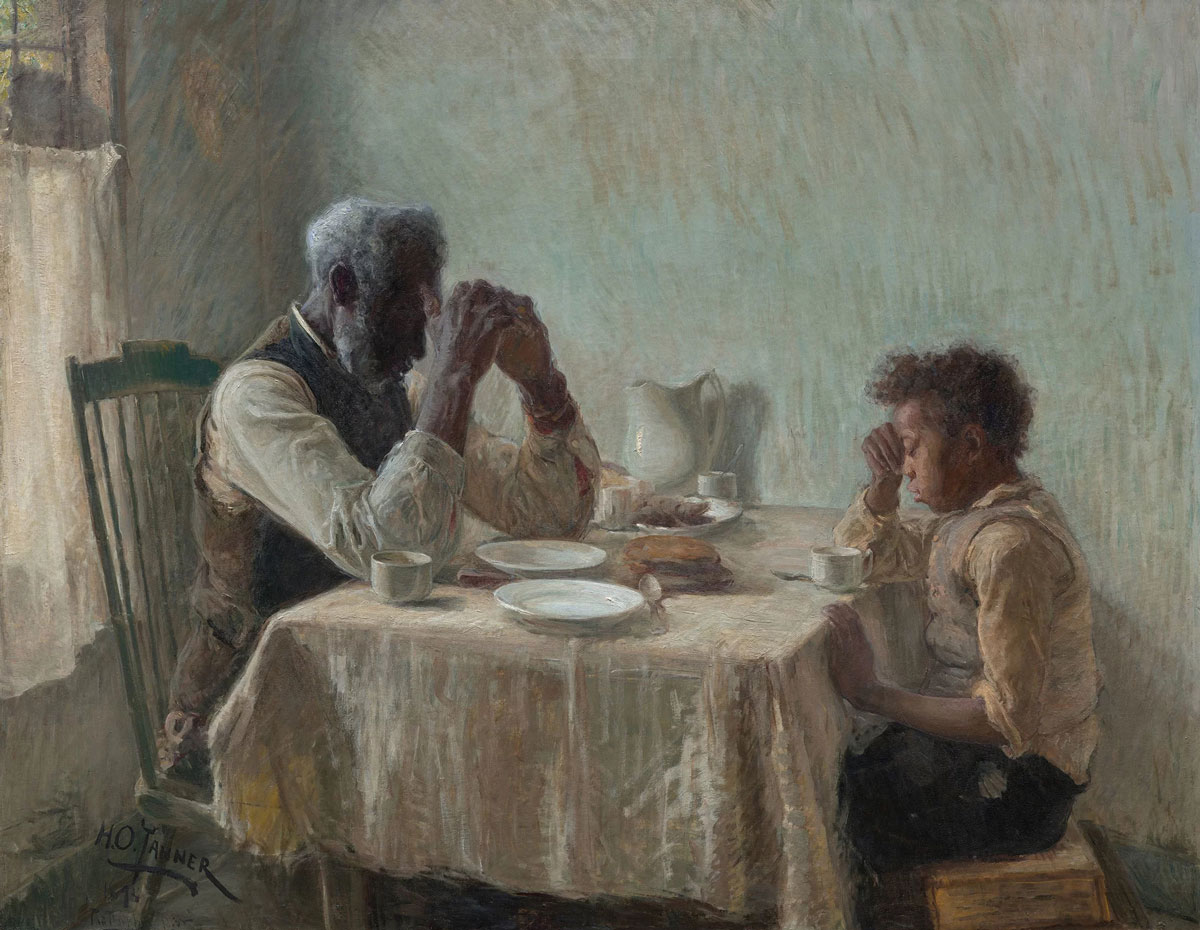
The Thankful Poor, 1894
Paul Cezanne (1839-1906)
Formalist
He’s a post-impressionist – continuing the work of impressionists but wasn’t afraid to break the mold.
Joseph Mallord William Turner (1775 – 1851)
Classicist
We should note that Turner worked in a lot of different mediums and types of art (historical, landscape, illustration, etc) which may place him as a formalist. But, his schooling was extensive, starting at a young age. He was dedicated to the academic art world and it informed his work of any style.
Edwin Church (1826–1900)
Animist/Iconoclast
His work illustrates his Christian beliefs, which makes me think he’s an animist. Church was well-traveled, which leans to the idea of searching for authenticity (iconoclast.) McCloud explains further that certain ideals go together well. Animists and iconoclasts see “through life’s lens” as McCloud puts it.
Rembrandt (1606-1669)
Classicist
Rembrandt raised the bar for the future of the classicists. A master.
Beatrix Potter (1866-1943)
Formalist
We know Potter as a prolific writer, scientist, scientific illustrator, and illustrator of children’s books. People call her “passionate” about animals but it was so much more. She had oodles of property she bought under the guise of a man and worked on techniques to improve raising and breading a variety of livestock…. Her work was always informed by her education and her hunger for it. Yes, she even studied fairy tales.
Robert Fawcett (1903–1967)
Classicist
It’s tempting to categorize many illustrators as classicists because their work features a lot of well-drawn beauty. Commercial illustration today still demands a level of beauty be accepted by the general public (and sell goods.) I’m still calling him a classicist for his incredible draftsmanship.
Frida Khalo (1907-1954)
Animist
No debate in my opinion.
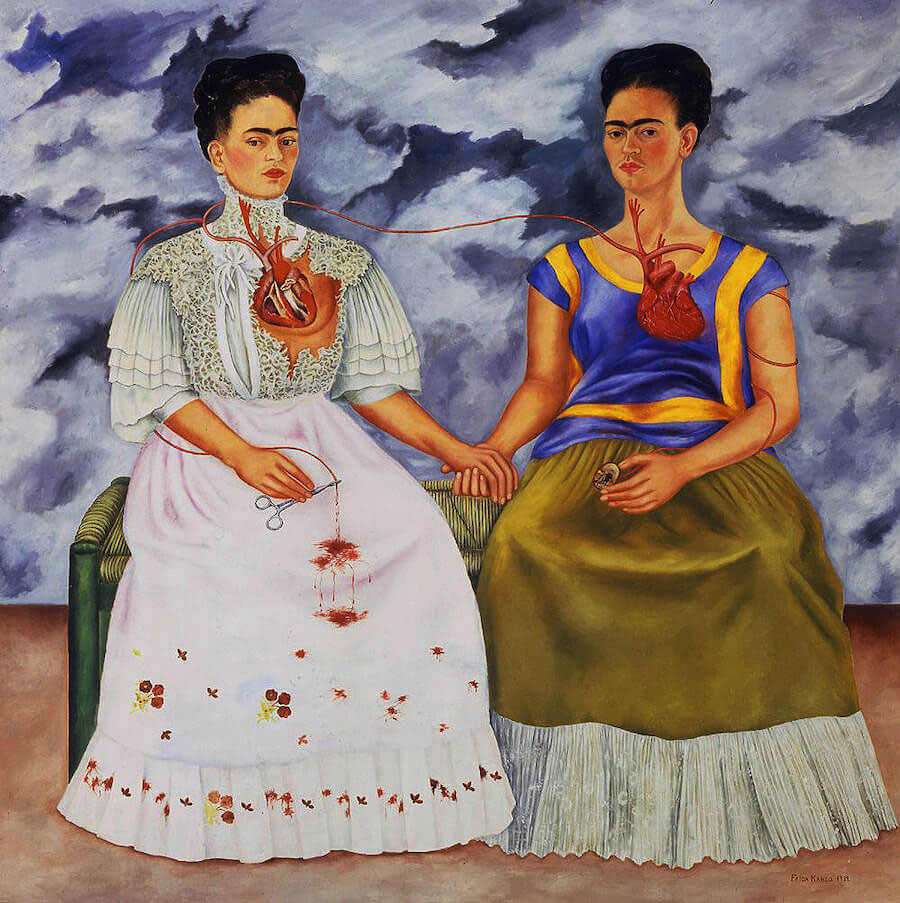
The Two Fridas, 1939
Vincent Van Gogh (1853-1890)
Formalist
It may be arguable that Van Gogh was a classicist following the beat of his own drum but deep down I think he’s a formalist. I remember visiting the DIA and learning about how grouped skeins of yarn as a way of seeing what colors look good together. He was creating on intuitive instincts… could he be an animist? Maybe my desire to roast a marshmallow at the formalist campfire and talk about yarn together is clouding my vision.
William-Adolphe Bouguereau (1825 -1905)
Classicist
The art speaks for itself on this one.
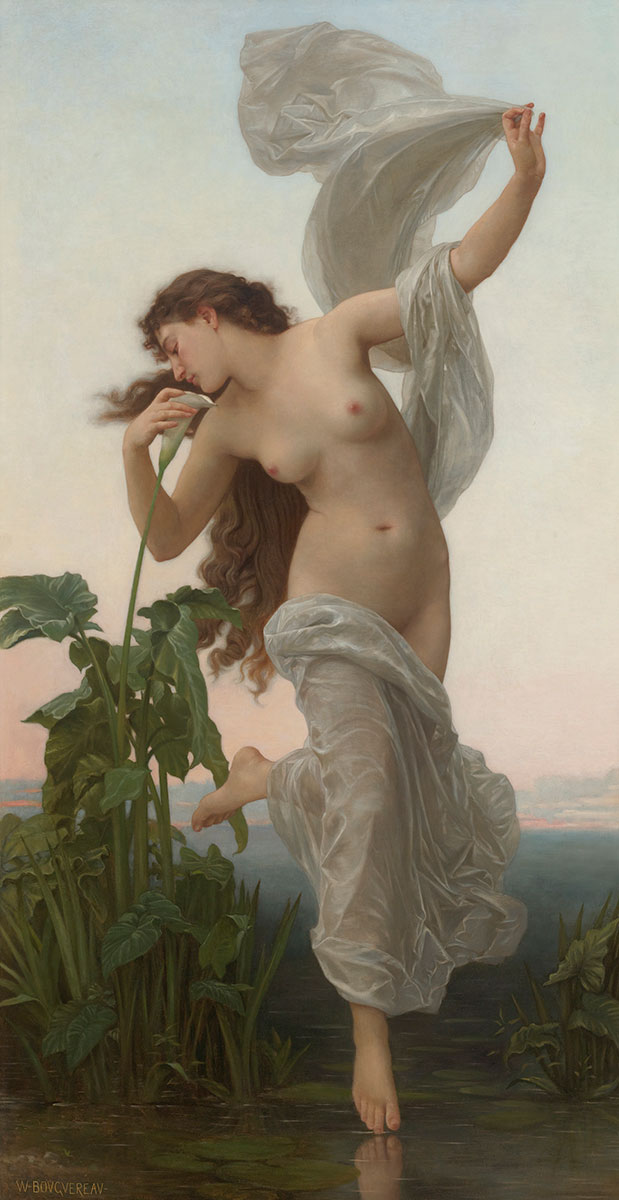
L’Aurore, or Dawn, 1881
Normal Rockwell (1894-1978)
Classicist
Mastery of a craft can include the craft of storytelling not just visual aesthetics, Rockwell does both.
It’s funny to think of whose who is around the same campfire and what campfires may clash. Many artists, including myself like work that doesn’t “look” like our own but somehow it resonates with us. I wonder if the work you like is made by an artist who sits around the same campfire.
Let me know how I did, what campfire you are sitting at and tell me where you think these artists hang out:
Eugène Delacroix
Gustav Klimt
Eyvid Earle
Dig deeper into this discussion with Making Comics:



By these definitions I’d probably consider myself an animist? Interesting categories and a different look at artistic values!
Based on our talks I can totally see that for you Bruce!! Content is king as they say..
This was a really interesting read and has really given me something to think about. It’s funny as I was having some deep dives with my girlfriend last night on art, my art, what it means to me and the walls that I seem to throw up in front of myself. I don’t know why exactly yet but this article feels like it fits in very neatly with what we were discussing last night and I thank you for writing it. I’m not entirely sure what campfire I’d be sitting at yet though but I like the idea of thinking about it this way.
It’s a journey and certainly, it would be hard for any artist to fit perfectly into just one.
GREAT POST! do you think from these Ideologies, early in an artists career they struggle with their voice because they dabble in each one but don’t know which one they lean towards naturally? for example from all of the classicists you mentioned I study heavily on the draughtsmanship side of things but when it comes to my art and expressing my voice I but heads with my inner Animist telling me the Classicist approach won’t get you that feeling you want from your art
Finding the balance between content (animist) and mastery of craft (classicist) is an ongoing journey. In illustration, I do believe you need some of both. An animist won’t let skills or style get in the way of their story. At a certain point, they let go, in my opinion. But a bit of both… can you imagine the possibilities!?!
Read this last night and I’ve been thinking about it ever since. I’ve been feeling like I’m at a crossroads in my own art, and this frames it in a new way. It’s kind of soothing in a way? Like, if even the greats have their own individual strengths and different priorities, maybe I can stop worrying about my work being better in every way and instead start thinking about what’s most important to me, and focus on improving that. Ty for writing this ❤️
I’m here to soothe! 😉 Once we really identify what’s important we can embrace that and go to places we probably can’t even fathom. I’m working on it too. Honing in is likely as important as letting aspects go in our work. *sigh* Easier said than done. Together, we will keep making.
Delacroix is sitting next to Sargent discussing toasting marshmallows. Meanwhile, Klimt chats with Van Gogh about how boring academics are. And I need to thank you immensely for giving me Eyvid Earle, I didn’t know his work and I’m ready to dive right in. Congratulations on your article, it’s wonderful.