


If I were to ask you “What does your house look like?” You would likely conjure an image in your head of what your house or apartment looks like, and then begin to list the things you ‘see’. You might even see yourself unlocking your own front door, helping you to remember those subtle, specific details.
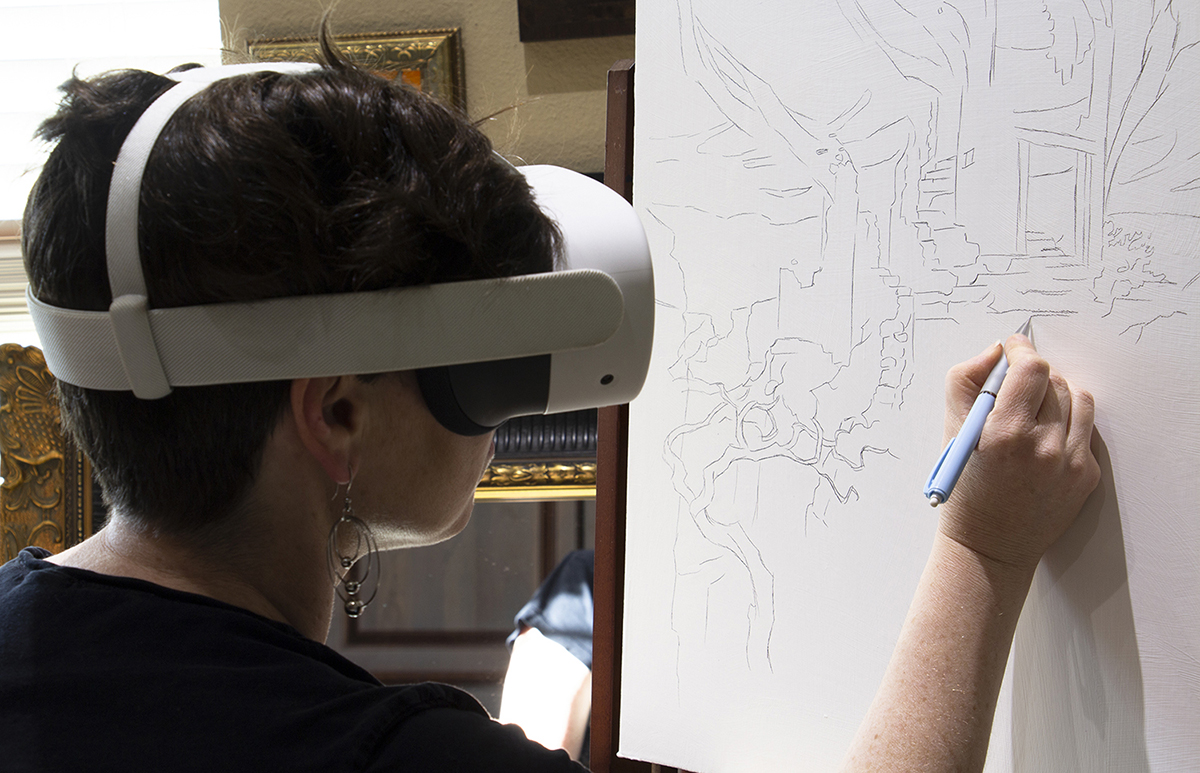
Believe it or not, some people can not do this. And I’m not talking about recalling details. Some people literally can not conjure an image in their mind’s ‘eye’. It is a little known condition called Aphantasia.
Aphantasia is a neurological condition where a person completely lacks the ability to imagine something visually. It first came to notice in 2005 when a patient who suffered a brain injury began complaining that he could no longer ‘imagine’ things. His Neurologist, Dr. Zeman, could not find any information on the condition and began to research the matter further. Through some very preliminary case studies, it seems as though quite a few people may be afflicted with this condition. As many as 2 out of every 100 people may have been living with Aphantasia their whole lives, but simply didn’t know what they were missing.
After all, how do you describe an absence of something you’ve never known, especially when the thing that is missing is so ethereal to begin with?
We understand so little about our ‘imaginations’, yet we take them completely for granted. Is a visual imagination a distinctly human trait, or perhaps even a learnable one? There are a few articles out there on the subject, which I find really intriguing.
Here is a NY Times article which gives a wonderful overview of the subject, and talks about how the condition first came to light:
http://www.nytimes.com/2015/06/23/science/aphantasia-minds-eye-blind.html
And here is an article from a man who has Aphantasia, describing how he never noticed anything was wrong… until he did! He captures his epiphany through inquiring texts to his friends, and tries his best to describe what does go on in his head.




Not to worry. Many people with this condition go on to become the CEO's of major movie studios.
Whoa. This is fascinating! Just yesterday I was thinking about blindness, about how I might cope — as an artist and storyteller — if I were to lose my vision. But to lose my *mind's* eye? That I can hardly imagine.
I've never heard of this before. The idea that people have never experienced a visual imagination before… wow. So intriguing. The mind is such an amazing thing!
A similar condition that I find fascinating is prosopagnosia where sufferers cannot distinguish individual faces. Also fascinating that a lot of people with the condition develop coping mechanisms to the point they never realize the issue. Just like the situation described above, it took people developing the condition later in life due to brain injury for it to get recognized, and congenital sufferers recognized it by reading about it.
A similar condition that I find fascinating is prosopagnosia where sufferers cannot distinguish individual faces. Also fascinating that a lot of people with the condition develop coping mechanisms to the point they never realize the issue. Just like the situation described above, it took people developing the condition later in life due to brain injury for it to get recognized, and congenital sufferers recognized it by reading about it.
This is FASCINATING… I couldn't put the second article (by the man with Aphantasia) down!! The human brain is truly mindblowing. But it also made me a little bit sad, because it's an illustration of how completely we can never know one another's experience… I can't imagine not having my 'mind's eye.'
Nice post!! Thanks for sharing.
Dermology anti aging Serum
dermology anti aging cream
Dermology
dermology hair removal cream
dermology hair removal cream
dermology hair removal cream
dermology cellulite cream
Xtreme No
Xtremeno
hgh energizer
Hi, I am a 4th year student at the University of Edinburgh. My dissertation involves thinking about scenarios and objects, and the part aphantasia may play in this. If you are interested, please take a look at my questionnaire (should take less than 10 minutes!) and share it with anyone else who may be interested. You can find it here: https://edinburghppls.qualtrics.com/SE/?SID=SV_7aphPJ3t0Xb76sd