

Hey- you’re busy, I’m busy- let’s keep it short and sweet this month.
So-what’s so great about N.C. Wyeth?
He knew how to make his audience look at the important part of his paintings. He used composition to lead the viewer through his pictures, enabling him to make a complex narrative in a relatively simple image. For example: Blind Pew- Wyeth wanted to add atmosphere and exposition to the picture, but he mainly wanted you to understand the protagonist’s fear of the visually disabled pirate.
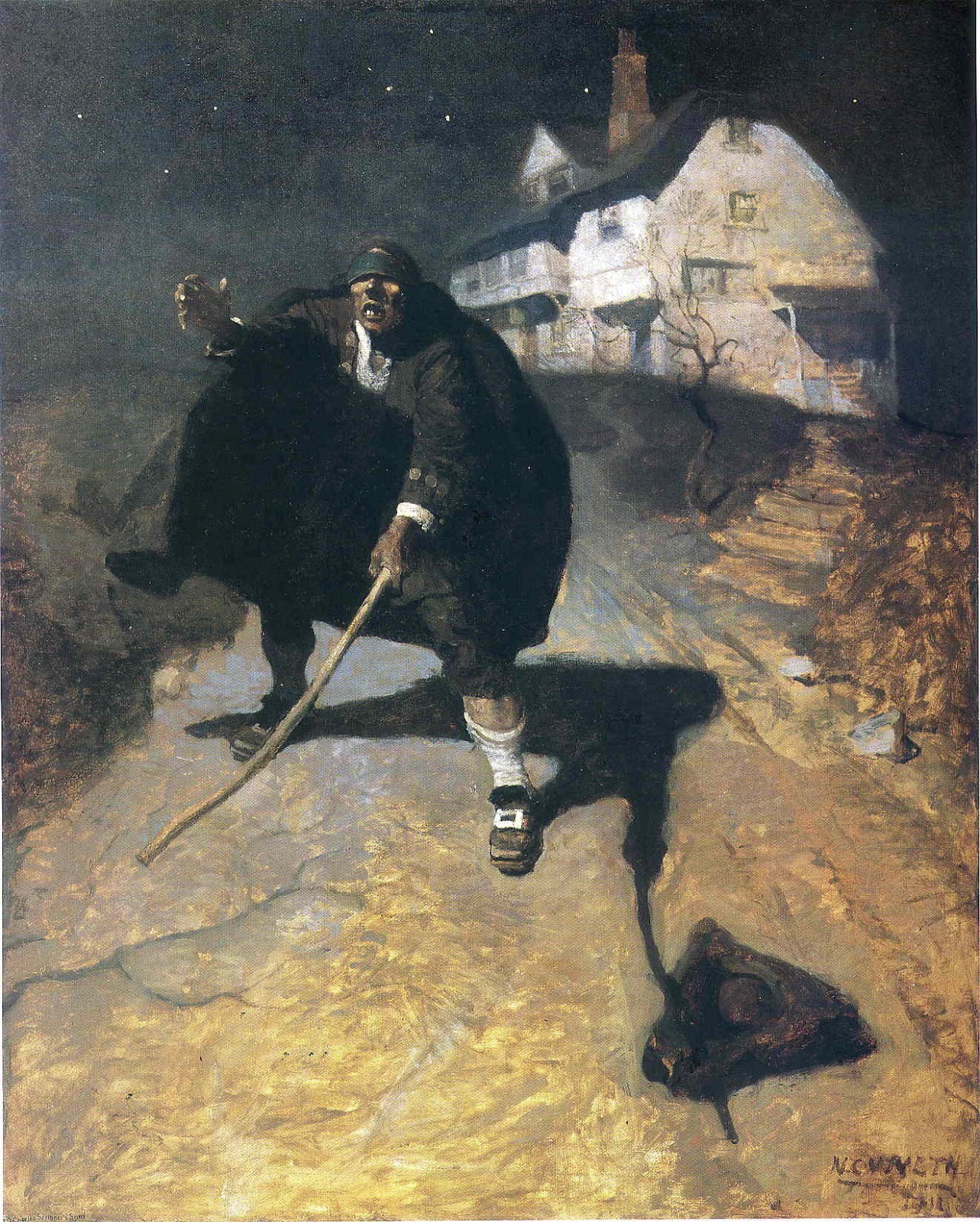
He reinforced by putting the brightest note of the painting on Pew’s gnarly gold lower tooth. Then, he made sure that the viewer focused on it by arranging every single part of the painting around it…

So everything in the painting is a path to that creepy tooth: the perspective of the house, the steps, the hat, the slope of the roof, the path, the shape of the cloak, the cane, the crack in the road. It’s not that subtle, but it works.
He did this all the time.
You might never notice the faint footprint in the sand, discovered by Robinson Crusoe after many years as a castaway. Finding this footprint is the turning point in the story:
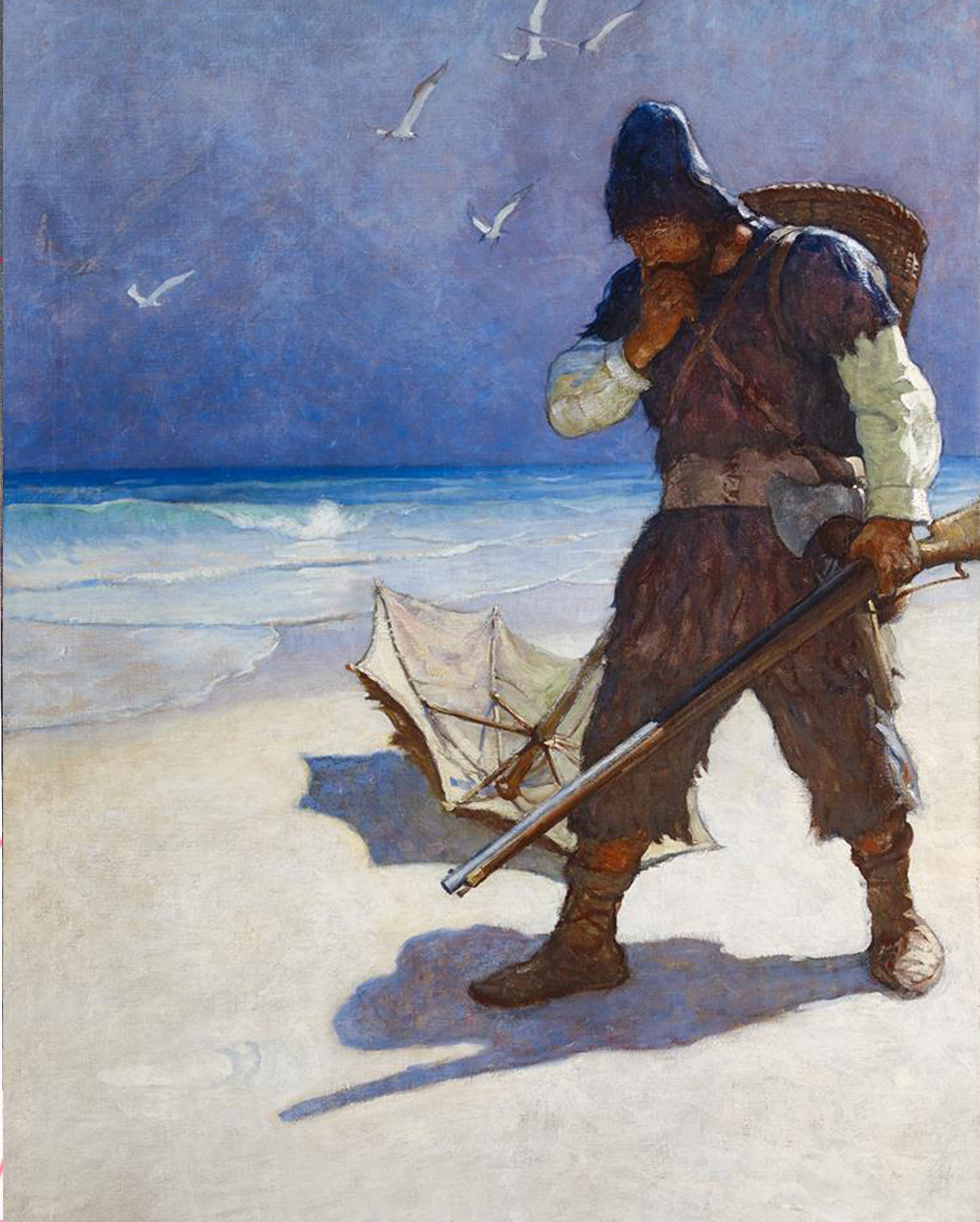
But you DO see it….
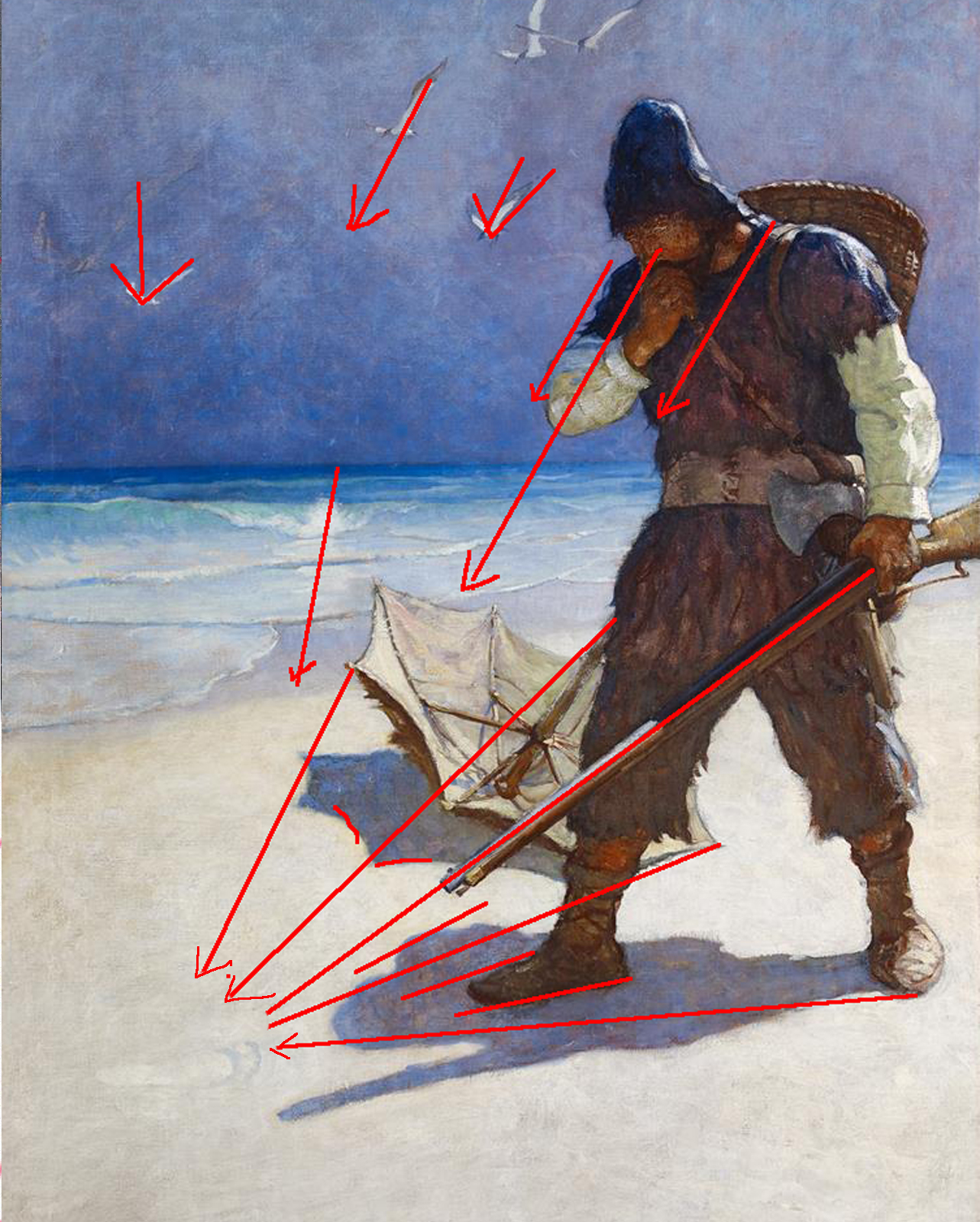
…because N.C. arranged every element in the composition to make the viewer aware of that footprint. Once you see it, just like Robinson Crusoe himself, once you see it you don’t really see or care about the rest of the picture, you only care about the footprint- ot another way of saying it might be that he made you see the concept of the picture. If you go through a book of Wyeth’s work, you will discover that he did this all the time. His sophisticated use of composition as a narrative tool is what makes him one of the most important illustrators ever, and makes his work totally relevant to every artist working today in narrative art.

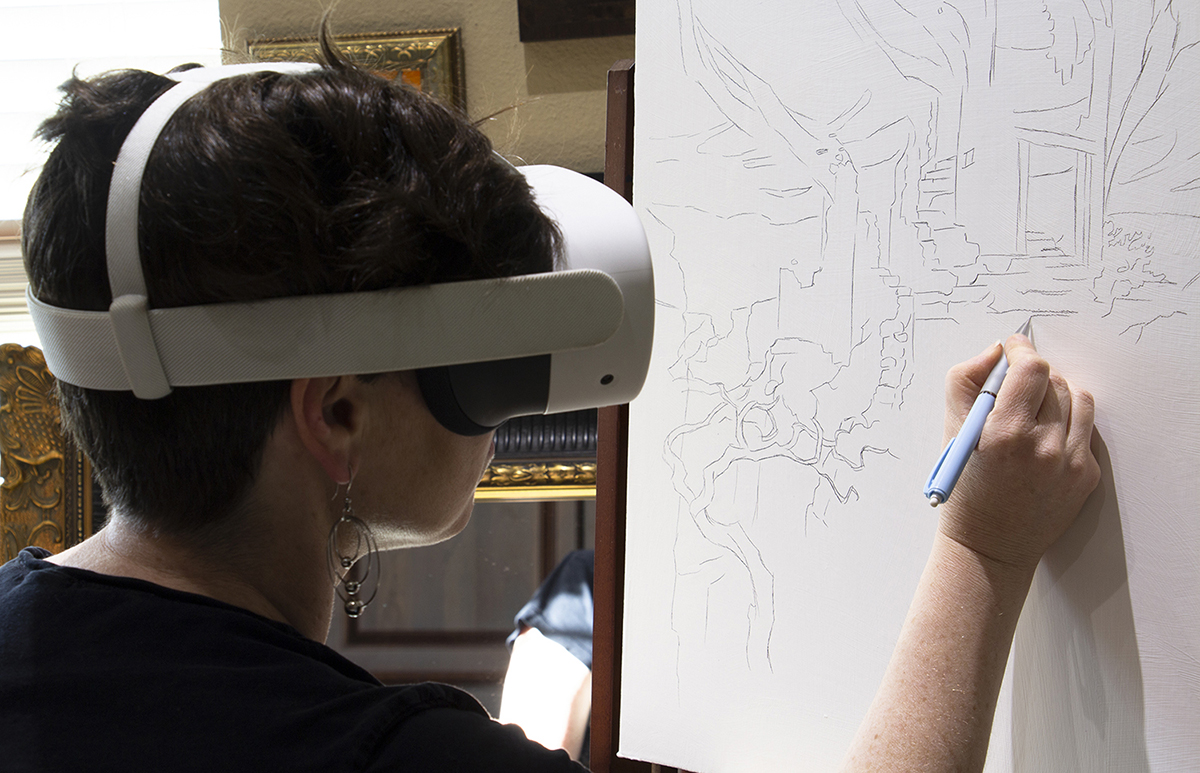

Wyeth’s picture making abilities astound me. I can truly say studying his work is what helped me turn the corner on how to arrange an image.
Great post!
His compositions are so perfect in their planning and communicate so clearly to the viewer what needs to be communicated, and the only problem is that he spoils us and makes us think it’s all so easy. Then we try it, ourselves, and … oops! Not so much.
Composition and tone. He’s absolutely a master of controlling his key– I’m agog at how well he conveys darkness in the first image without actually making everything pitch black.